Runners Take on the Dust for Trees Challenge as Lukenya University Targets Restoration of the Tsavo Ecosystem
By Anchor Writers
On the dry plains of Kibwezi East, where the winds of the Tsavo ecosystem carry the dust of a fragile landscape, sport and environmental activism are preparing to meet again.
The fourth edition of the Lukenya University Ten Million Trees Marathon and Cycling Event was officially launched at Kambu Market Centre in Makueni County, with organizers positioning the March 28, 2026 race as more than a competition of endurance.
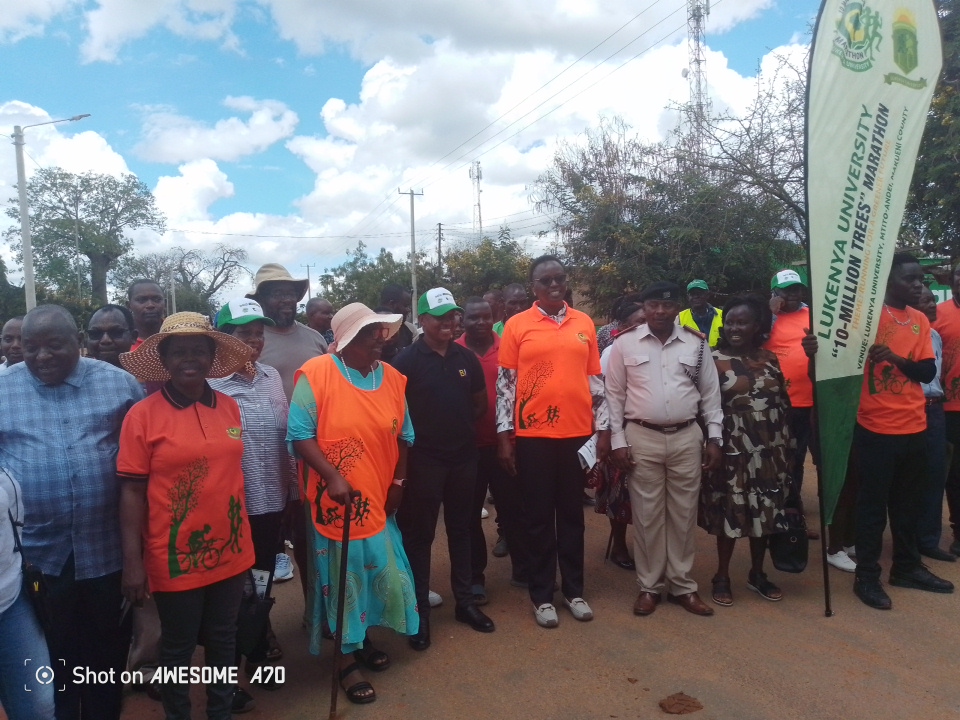
Mrs Martha Mulwa seen in the company of the Lukenya University communities at the launch of this year’s Tree Planting Cycle.
It is also a campaign to restore one of Kenya’s most threatened dryland ecosystems.
What began as a university-driven conservation initiative has steadily grown into a regional environmental movement rallying athletes, cyclists, farmers and conservationists behind the urgent task of restoring degraded land.
At the centre of the initiative is a bold environmental pledge — planting millions of trees in a landscape where deforestation, charcoal burning and climate stress have steadily stripped the land of its natural cover.
Speaking at the launch, Lukenya University Vice Chancellor Dr. Judith Wafula said the programme has already begun delivering tangible results.
“We have already planted over one million trees, and many of them are thriving,” she said, noting that the effort is aimed at reversing years of environmental degradation caused by indiscriminate tree cutting for timber and charcoal.
But Dr. Wafula stressed that the programme is not simply about ceremonial planting.
“This initiative goes beyond planting trees. We are training farmers and community members on how to nurture the seedlings so they survive and restore the environment,” she said.
According to the Vice Chancellor, the university is working closely with government forestry officers and local communities to expand tree cover while contributing to Kenya’s national goal of planting 15 billion trees over the next decade.
The marathon itself reflects that growing ambition.
This year’s event will feature multiple race categories designed to widen participation. They include the 42-kilometre full marathon, which returns after athletes demanded its reinstatement, the 21-kilometre half marathon, a 10-kilometre local race, and a 5-kilometre fun run aimed at encouraging community involvement.
Cycling will also take centre stage in this year’s edition. Organizers have introduced a 50-kilometre mountain bike race for the first time, alongside the 21-kilometre “Black Mamba” local cycling race reserved specifically for cyclists from Kibwezi East Constituency.
The inclusion of local races reflects an intentional effort to anchor the conservation campaign within the communities most affected by environmental degradation.
Organizers say the marathon has already planted more than one million trees since its inception, turning the event into an unlikely but powerful fusion of sport and ecological restoration.
Each edition of the race brings renewed attention to the fragile drylands bordering the Tsavo ecosystem, where communities increasingly face the consequences of disappearing tree cover — soil erosion, water scarcity and rising temperatures.
By linking sport with conservation, the Lukenya marathon aims to transform athletic energy into environmental action.
And as runners and cyclists prepare to take to the roads and trails of Kibwezi East on March 28, organizers hope each kilometre covered will carry a deeper message: that restoring Kenya’s drylands will require both endurance and collective resolve.
Stay Anchored
For more stories visit The Anchor: https://theanchormedia.org